
The Reality Many UN/NGO Professionals Don’t Say Out Loud
Feb 06, 2026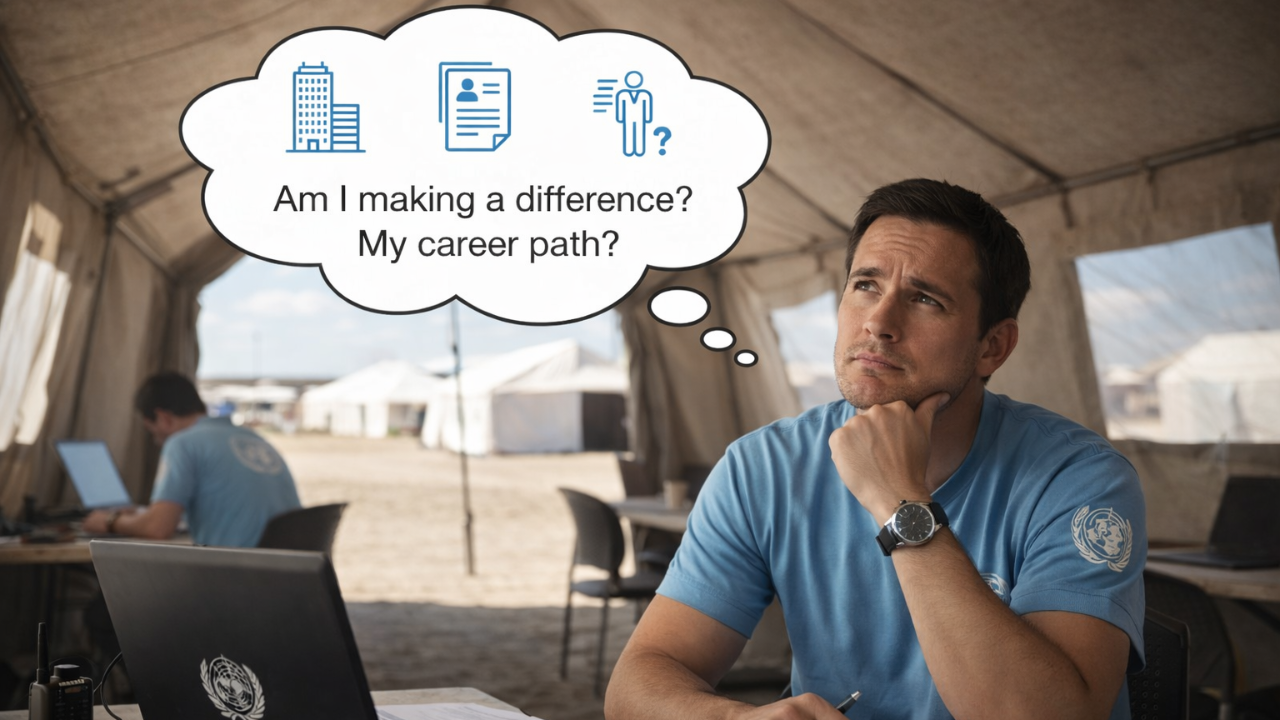
There’s a particular kind of silence that arrives uninvited.
Not the silence of being between contracts.
Not the familiar uncertainty of funding cycles that most UN or NGO professionals have learned to navigate.
This is different.
It’s the quiet moment when you realize the humanitarian sector you’ve dedicated 15 years to may no longer have a clear place for you.
You’re Not Imagining It
Organizations restructure again.
Role descriptions shift.
Strategic priorities change, and suddenly your expertise no longer fits neatly into the new direction.
Even the language in humanitarian sector job postings feels unfamiliar now coded for a different generation of worker, different funding logics, different expectations.
And you find yourself doing the math:
Too experienced for junior roles.
Too expensive for flattened organizational charts.
Too specialized for what funders seem to want right now.
This is the part that rarely gets acknowledged in conversations about international development careers:
Most senior humanitarian professionals experience this realization completely alone.
You assume you’re the only one feeling it. You wonder whether you failed to adapt, whether you should have anticipated the shift sooner. Admitting uncertainty can feel like betraying everything you’ve built.
So you rationalize and stay busy. You apply for roles that don’t quite fit and tell yourself it’s temporary just another transition phase.
But this isn’t temporary job insecurity.
This is systemic transformation across the humanitarian and international development sector and it’s moving faster than most careers can naturally pivot.
Why This Feels Different
What makes this moment so disorienting isn’t just professional uncertainty.
It’s identity uncertainty.
When your vocational identity has been built around humanitarian work, questioning your place in the sector also means questioning who you fundamentally are your expertise, your contribution, your sense of purpose.
That’s not something you resolve with a sharper CV or a better cover letter.
Common Patterns to Avoid in Times of Sector Shift
When this realization remains unspoken, many experienced NGO professionals fall into patterns that feel productive in the short term but quietly erode clarity over time.
The most common ones I see include:
→ Reactive panic decisions, such as accepting wrong-fit roles out of fear rather than alignment
→ Paralyzed inaction, waiting for stability to return instead of responding intentionally
→ Dismissing the discomfort altogether until a restructure or contract ending forces the issue
None of these patterns honor what you’ve built, nor do they open space for where you could go next.
Naming the Moment Is the First Step Forward
If this quiet realization has visited you recently, you’re not alone in it.
And naming it isn’t catastrophic, it’s the first honest step toward navigating what comes next with clarity rather than crisis.
Question for reflection:
When did you first notice this feeling, and what did you tell yourself about it at the time?
If you’re navigating this space within humanitarian sector jobs or international development careers and want a thinking conversatio, not a panic-driven one, my door is open.
━━━━━━━━━━
#HumanitarianCareers #NGOCareers #InternationalDevelopment #DevelopmentSector #CareerTransition #ProfessionalGrowth #CareerClarity
If you like to learn more about team coaching and team assessment, then kindly get in touch with QOEN Coaching & Consulting through clicking on the button below.
Stay connected with news and updates!
Join our mailing list to receive the latest news and updates from our team.
Don't worry, your information will not be shared.
We hate SPAM. We will never sell your information, for any reason.
